⚡ Quick Answer: What Is a Debt Consolidation Loan?
A debt consolidation loan combines multiple debts into one monthly payment. It can reduce interest costs, simplify repayment, and improve cash flow — but it may also increase total repayment costs if the loan term is extended.
Why People Use Debt Consolidation Loans
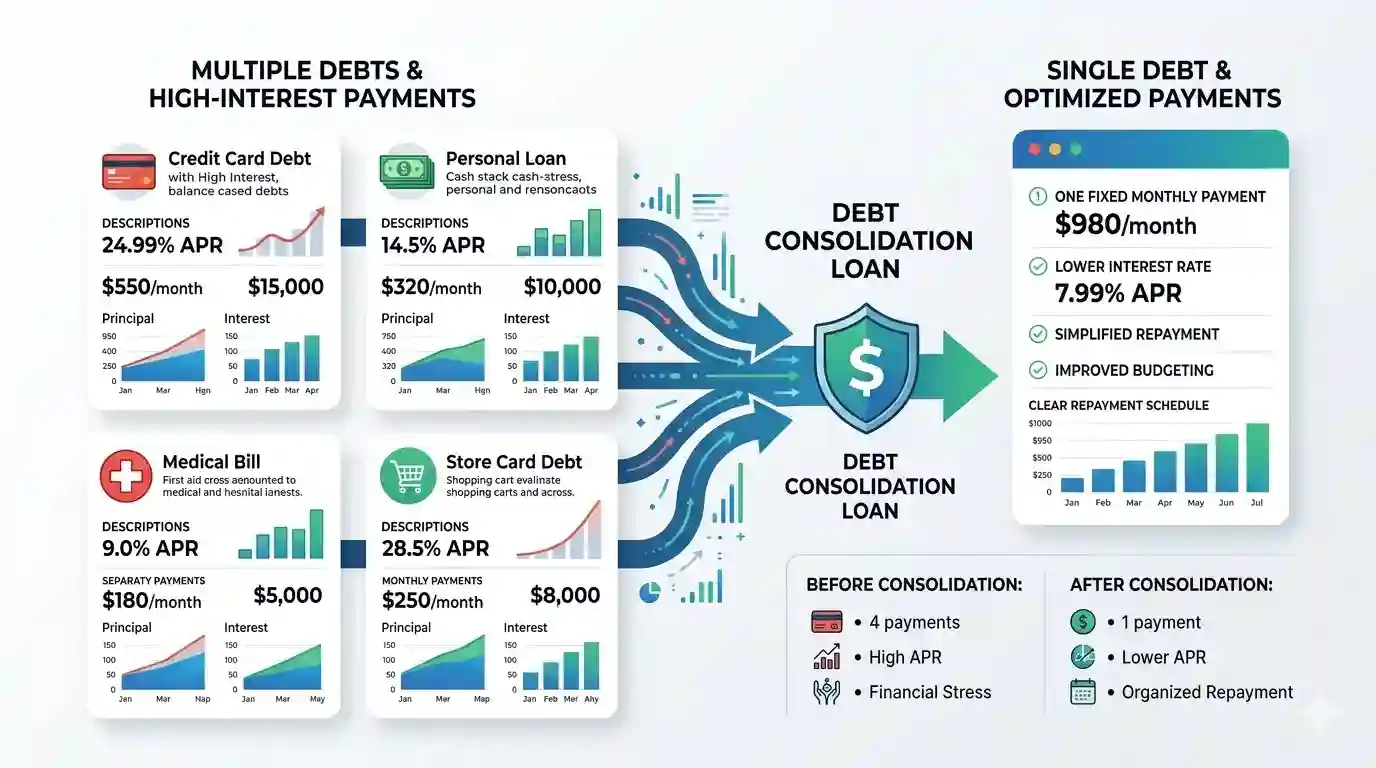
Juggling multiple credit cards, personal loans, and medical bills with different due dates and high interest rates can feel overwhelming. Debt consolidation offers a cleaner path by rolling everything into one manageable payment.
| Problem | How Debt Consolidation Helps |
|---|---|
| Multiple due dates | Combines into one payment |
| High credit card APR | May lower interest |
| Financial stress | Easier repayment tracking |
| High monthly payments | Longer term may reduce payment |
How Debt Consolidation Loans Work Step by Step
Step 1 — Calculate Your Total Debt
| Debt Type | Balance | Interest Rate |
|---|---|---|
| Credit Card A | $4,000 | 24% |
| Credit Card B | $3,000 | 19% |
| Personal Loan | $5,000 | 14% |
Total Debt = $12,000
Step 2 — Apply for a Consolidation Loan
Lenders will run a credit check, evaluate your debt-to-income ratio, and offer terms based on your credit profile. Compare APRs, not just monthly payments.
Step 3 — Pay Off Existing Debts
Many lenders pay your creditors directly so you don't have to manage the transfers yourself.
Step 4 — Repay One Fixed Monthly Payment
You now have one payment instead of many, making budgeting much simpler.
Debt Consolidation Loan Formula — Monthly Payment Calculation
Where:
M = Monthly payment
P = Total consolidated amount
r = Monthly interest rate (APR ÷ 12)
n = Total number of months
Debt Consolidation Loan Example — Real Monthly Payment Breakdown
Loan Amount
$12,000
APR
10%
Term
4 Years
Debt Consolidation Loan vs Credit Card Debt
| Feature | Credit Cards | Debt Consolidation Loan |
|---|---|---|
| Interest Rate | 18–35% | 6–18% |
| Payments | Multiple | Single |
| Budgeting | Difficult | Easier |
Pros of Debt Consolidation Loans
- Lower Interest Rates: Replace 24% credit card debt with 10% loan.
- One Fixed Monthly Payment: Simplifies budgeting dramatically.
- Faster Debt Organization: Clear end date and repayment schedule.
- Potential Credit Score Improvement: Lower utilization ratio.
Cons of Debt Consolidation Loans
- Longer Term = More Interest: Extending from 2 to 5 years increases total cost.
- Fees: Origination fees can add up.
- Risk of New Debt: Freeing up credit cards may tempt new spending.
Debt Consolidation Loan Interest Rates Explained
| Credit Score | Typical APR |
|---|---|
| Excellent (750+) | 6–10% |
| Good (700–749) | 10–15% |
| Fair (650–699) | 15–22% |
Does Debt Consolidation Hurt Your Credit Score?
Short-term dip is common, but long-term gains are possible with responsible repayment.
Final Thoughts — Is a Debt Consolidation Loan Worth It?
Debt consolidation can be an excellent tool when used responsibly. It works best for people with stable income who have high-interest debt and the discipline not to accumulate new balances. Always compare multiple offers and calculate the true cost using our loan tools.
Written by Rana Muhammad Abdullah
MERN Stack Developer & Tool Maker · Mechatronics & Control Engineering Student · LinkedIn